
COVID-19
COVID-Related Excess Death and Sickness
This paper from Greece (2026-01-19) reports that children who had a confirmed COVID-19 infection had worse global longitudinal strain (GLS) — a measure of how much the left ventricle of the heart can contract. Kids who had more severe infections had worse GLS.
This paper from Japan (2026-01-21) reports that, in an electronic records search, people diagnosed with COVID-19 had a 36% higher risk of getting prescribed medicine to treat autonomic dysfunction or had a tilt-test (used in diagnosing postural tachycardia syndrome) than matched COVID-less controls.
🛌 This paper from Japan (2026-01-22) reports that, in an electronic records search, people diagnosed with COVID-19 had a 71% higher risk of getting prescribed medicine to treat insomnia than matched COVID-less controls.
This paper from USA (2026-01-19) reports that children with documented COVID-19 infections were 24% more likely to have new-onset dyslipidemia (abnormally high or low cholesterol levels) compared with kids who did not have documented COVID-19 infections.
🤰 This paper from USA (2026-01-19) reports that babies exposed to COVID-19 in the womb score the same on neurodevelopment milestones who are not exposed.
🪦 This paper (2026-01-29) looked at excess deaths across a bunch of countries, trying to answer the question, “did COVID-19 simply move deaths of frail people forward a few years, or did COVID-19 kill more people than would be expected”? The answer, for almost all countries, is pretty clearly that COVID-19 did not simply move deaths forward. They point out if COVID-19 just moved deaths forward a few years, then the death rate should have dropped after a few years. In fact, the death rate went up in most countries. For example:
| Country | Death rate ’00-’02 | Death rate ’00-’04 |
| Canada | 142 | 172 |
| USA | 405 | 431 |
| Finland | 167 | 259 |
| Italy | 443 | 529 |
| Spain | 301 | 386 |
| Croatia | 600 | 703 |
This paper from Sweden (2026-01-21) found that COVID-19 vaccination had absolutely no effect — positive or negative — on childbirth or miscarriages. (It was a large study, too, so it wasn’t a matter of the study being underpowered.)
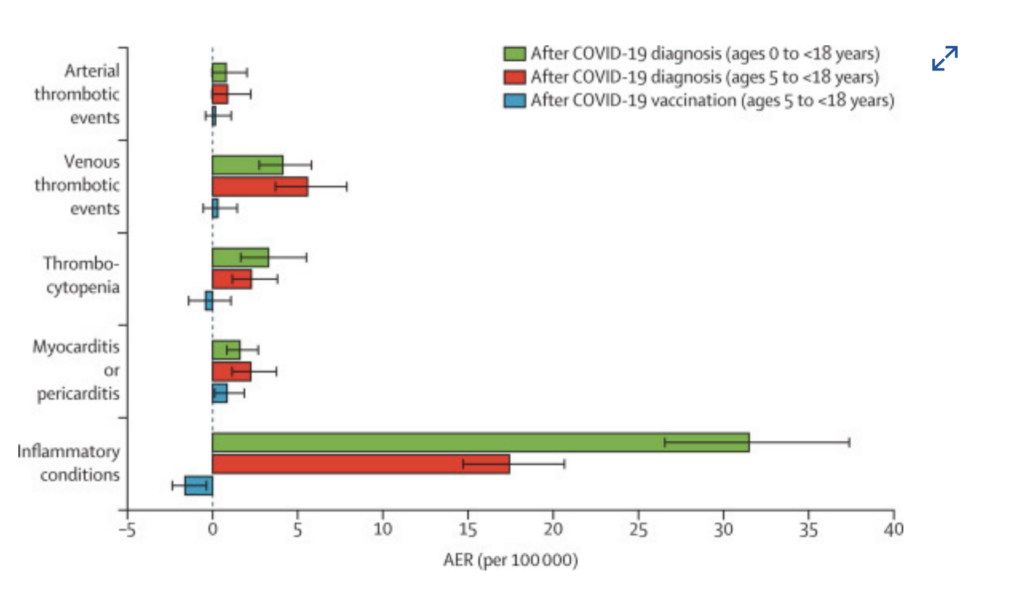
Infection is still more dangerous than vaccination; it hasn’t changed, folks. This paper from UK (2025-12) reports that a COVID-19 infection raises children’s risk of many things. In the first week after the diagnosis of a COVID-19 infection, the following conditions have these higher risks for children:
- arterial thromboembolism: +133% higher risk;
- venous thromboembolism: +390%;
- thrombocytopenia (low platelets in the blood): +264%;
- myocarditis or pericarditis: +246%;
- inflammatory conditions: +1384%.
Meanwhile, the risk of myocarditis or pericarditis within the first four weeks after vaccination is only +84%, while the risk of the other things was minimal or even lower than before vaccination:
Long COVID
🧠 This paper from Australia (2026-01-20) reports that Long COVID patients, ME/CFS patients, and healthy controls all had different neural activity when given challenging cognitive tasks. Long COVID and ME/CFS are similar, but not the same thing.
🧠🌫️ You might have seen articles about this paper (2026-01-27) about how “brain fog is worse in rich countries than in lower-income countries”. I call bullshit. What really is going on is that brain fog gets diagnosed more in richer countries than poorer countries. Not only do richer countries lower barriers to healthcare than poorer countries, they tend to have more stigma about mood disorders. (The study gathered people from Long COVID clinics or equivalent in some countries, and diagnosed survivors with/without Long COVID over the phone in other countries.)
Vaccines
💉 This paper from USA (2026-01-23) reports that vaccine effectiveness of Pfizer’s LP.8.1 was 57% effective against Emergency Department or Urgent Care visits, and 54% effective against outpatient visits. The study was done in late 2025 and patients generally had been vaccinated about 4 weeks earlier.
💉 This article (2026-01-23) says that the number of COVID-19 vaccines delivered in Alberta dropped in half this year compared to last year. This is not a huge surprise, given that they made you sign up a year in advance (with a flakey on-line booking system) and pay $100. Addendum: my bad, Alberta didn’t make you sign up a year in advance.
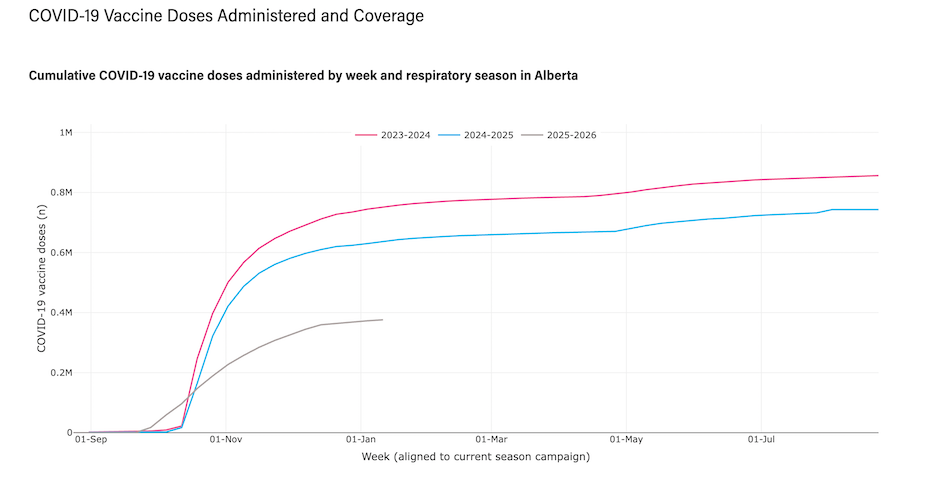
Hmm, I wonder if that has anything to do with this article (2026-01-28) reporting that Alberta’s emergency departments being overwhelmed? (Actually, probably not. The article describes a more systemic issue and COVID-19 rates are relatively low right now.)
💉 This paper from USA (2026-01-23) reports that a Shingrix vaccination reduces the risk of late-onset Alzheimer’s disease by 37% for people who haven’t had a COVID-19 infection, but that drops to only a 23% reduced risk for people who had a COVID-19 infection.
💉 This paper from Netherlands (2026-01-24) reports that there was a 44% reduction in all-cause mortality in the first three weeks after people’s first COVID-19 vaccine (compared to the period after three weeks), and a 51% reduction after boosters. Meanwhile, there was a 16x risk of all-cause mortality in the three weeks after a documented COVID-19 infection (compared to the the time period after that).
One factor which could explain at least part of the apparent protective effect of vaccines is that you have to be somewhat healthy to get a vaccine. Not only do you need to go to the vaccination location, but you’re not supposed to be sick when you do. However, the lower immediate mortality is pretty strong evidence that vaccination is not bad for you — especially compared to what happens if you get a COVID-19 infection!
It is also possible that vaccination is bad for you but only after three weeks. That seems unlikely to me.
Pathology
😬🩸 This paper from USA (2026-01-08) reports that prior research says that COVID-19 infections reduce the number of plasmacytoid dendritic cells and CD8+ T cells. The paper goes on to report that when normal human immune enzymes break down the SARS-CoV-2 spike protein, the fragments left behind are the right shape to poke holes in the dendritic and T cells. So the act of the immune system killing SARS-CoV-2 damages the immune system and makes it harder to kill SARS-CoV-2.
If this is true, I would think that vaccines — which churn out spike proteins — would also kill dendritic and T cells. Maybe vaccination doesn’t make enough spike protein to kill enough cells to notice? If remnants of vaccine spike cells killed a lot of cells, you would think that the all-cause mortality rate right after a vaccine would be noticeably higher — and all-cause mortality is lower right after a vax (see previous paper).
This paper from Türkiye (2026-01-21) reports that, among children admitted to hospital with pneumonia from either COVID-19 or influenza, a lot had liver issues, with COVID-19 being worse for the kids:
- By the time they got admitted, 37.6% of the COVID-pneumonia kids had liver injury, compared to only 29.2% of influenza-pneumonia kids;
- Over the course of the kids’ acute disease, more kids got liver injury: 55.1% of the COVID-pneumonia kids, compared to only 37.5% of the influenza-pneumonia kids;
- Among the kids who had normal liver function at admission, 30.2% of the COVID-pneumonia kids developed liver injury, compared to 23.5% of the influenza-pneumonia kids;
- 14% of the COVID-pneumonia kids died, compared to 0% of the influenza-pneumonia kids.
The article notes that some of the liver injuries might have come from drugs used to treat the COVID-19/influenza, but I don’t know enough to know whether the COVID-19 drugs or the influenza drugs are more dangerous.
Mitigation Measures
🦠 This paper from USA (2026-01-28) reports that viral healthcare-acquired infections (HAIs) in in the neonatal ICU dropped when stricter mitigation measures for COVID-19 were in place, but bacterial and fungal infections did not.
- Viral HAIs dropped by 55% during the early mitigation measures period from pre-pandemic levels
- viral HALs increased some in the later mitigation measures period (April 1, 2021, to July 31, 2022), but were still 42% lower than pre-pandemic;
- bacterial and fungal HAIs through 2022 were about the same as pre-pandemic.
Transmission
🧒👦🤧 There are a lot of people who are asking, “Why did we shut the schools down when kids don’t get sick/don’t pass it on?” The answer is that kids do get sick and they do pass it on. This paper from USA (2026-01-27) says that the secondary attack rate (number infected divided by number exposed) did not significantly differ between households with an infected child or with an infected adult — the median secondary attack rate was about two-thirds for both adult and child index cases, and 27% of the index cases were kids.
Why should we trust this study? They also note that many studies from the same general time period (the study was done between December 2020 through November 2021) had kids not being infected often but the kids were frequently not exposed much due to strong-ish mitigation measures (e.g. school closures). In addition, most studies don’t look at asymptomatic cases (because testing is haaaaaard); this study tested everybody all the time, even people who were asymptomatic.
This study did find that sharing a bedroom or a bathroom increased the risk of a secondary infection by 2.36 times, and that 35.6% of the cases were asymptomatic (and 40% of the index cases).
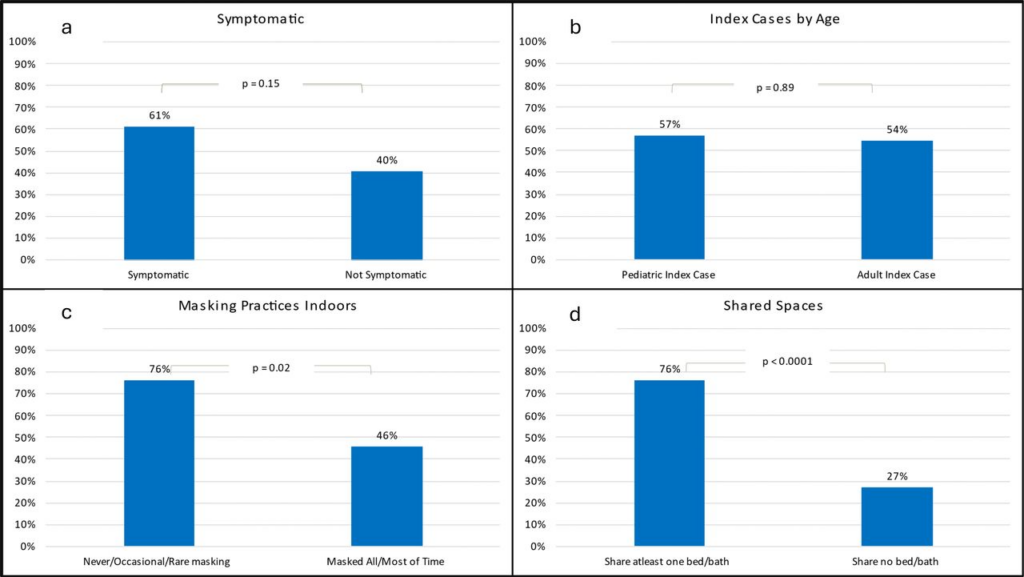
They did not publish how often kids were asymptomatic compared to adults; I wish they had. 🙁
Reading
I can’t say this is Recommended Reading, because I haven’t read any of these books (yet), but this article (2026-01-15) discusses several books which have Long COVID as an overt or covert theme:
- Will There Ever Be Another You? by Patricia Lockwood (Vancouver Public Library record)
- There’s Nothing Wrong With Her by Kate Weinberg (VPL record)
- Sex of the Midwest
H5N1
Transmission
🐄🐦⬛🤧 This article (2026-01-23) reports that a cow in the Netherlands has tested positive for H5N1 antibodies. A cat on the farm died.
There have been three separate jumps from birds to cows in the USA (as mentioned in this press release (2025-12-19), so it’s not entirely surprising that there was a jump from birds to cows somewhere else. I suspect that there have been jumps that we don’t even know about yet. 🙁
This paper from BC (2026-01-16) reports that the amount of antibodies which cross-protect against H5N1 in a population reflects which strains were dominant when that population was school-aged:
- The highest percent with anti-H5N1 antibodies was in people born 1997-2003 who were in school during the 2009 H1N1 pandemic;
- The lowest was among the youngest (i.e. least flu-exposed) kids, born 2015-2023 and people born 1957-1967 (who were school aged during H2N2’s heyday);
- Elderly people, born before 1947 and exposed to H1N1 as children, had quite high immunity, higher than you would expect.
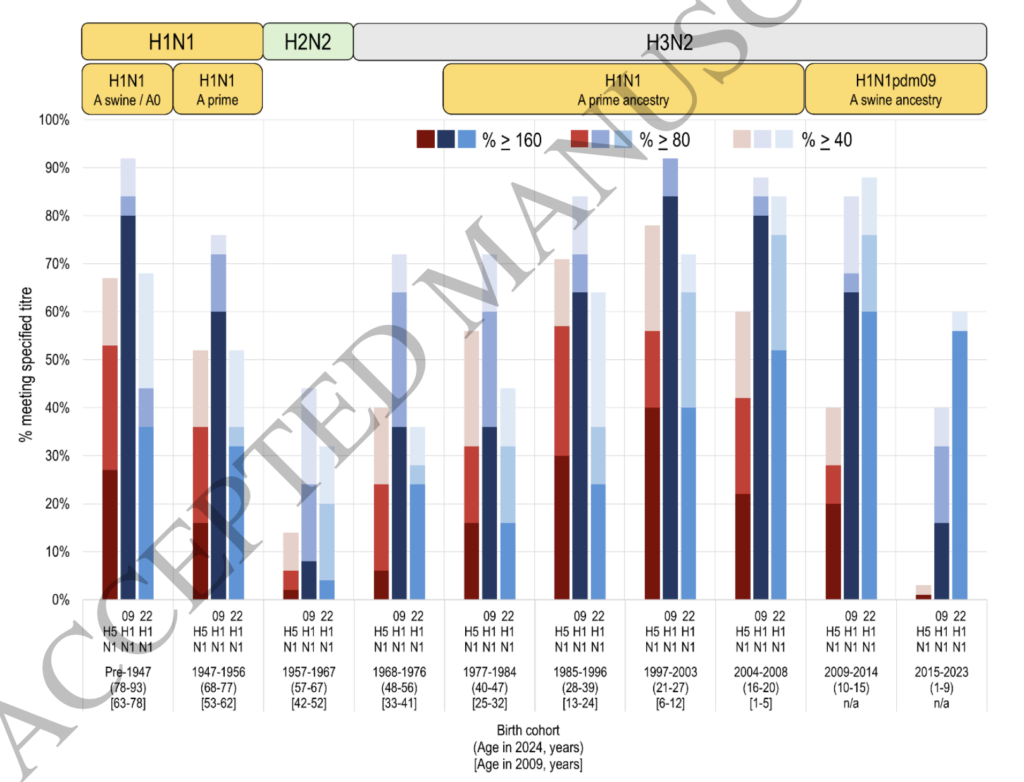
In the USA, there has been minimal illness among dairy workers who have gotten H5N1. I wonder how old the average dairy cow worker is, but suspect they are young adults — who would have relatively high cross-immunity to H5N1.
Measles
Transmission
According to the Government of Canada Measles and Rubella Monitoring Report (updated 2026-01-26), in the week ending 17 January 2025, the following jurisdictions had the following number of measles cases:
- Canada: 50;
- Alberta: 24 (!);
- Manitoba: 18 (!);
- BC: 7;
- Quebec: 1.
Mpox
Wastewater
🎉 According to the Government of Canada’s Wastewater Monitoring page, there were NO detections of mpox last week! There hasn’t been a detection in BC for a while, but there were consistent detections in Ontario.
1 comment
Comments are closed.