
COVID-19
Long COVID
👧 There has been a lot of hand-wringing about high absentee rates among children, with very little mention of the fact that maybe, y’know, children are sick more than were before everybody started collecting COVID-19 infections like they were baseball cards. Finally, a paper from USA (2026-01-16) does something that starts to look at the relationship between Long COVID and absenteeism. They report that about 1.4% of schoolchildren have Long COVID, and that they are about 2.5 times more likely to be chronically absent than students who had COVID-19 but not Long COVID.
🧠 This paper from USA (2026-01-12) reports that recovery from neurological Long COVID is bumpy at best. They gave Long COVID patients with neurological symptoms reported every day via a mobile app, and found:
- a bit under half — 43% — improved over three months, but most did not improve;
- fewer women improved than men;
- among the people who improved, their condition fluctuated a lot — more than the non-improvers, and was not at all linear;
- patients who had loss of smell, anosmia, loss of taste, and did not have insomnia were less likely to improve.
💪 This paper using data from Italy (2026-01-13) reports that people with Long COVID have fewer nerves in either the muscles which make your hairs stand up when you get goosebumps or in the sweat glands. This was even true if the patients had a normal density of nerves in the outer layer (epidermis) of their skin.
This preprint from USA (2026-01-16) reports that Long COVID is bad for you. The risks of cardiovascular, renal, and pulmonary outcomes were higher for Long COVID patients than controls, usually across age groups:
| disease | risk change for young adults | risk change for middle-aged | risk change for seniors |
| essential hypertension | +21% | +17% | +14% |
| atrial fibrillation | +73% | +27% | +8% |
| ischemic heart diseases | +74% | +49% | +36% |
| heart failure | +75% | +42% | +20% |
| deep vein thrombosis | +91% | +52% | +21% |
| pulmonary embolism | +80% | +48% | +28% |
| stroke | +48% | n/s | +14% |
| acute kidney injury | +11% | +12% | -8% |
| chronic kidney disease | +69% | +32% | +9% |
| end stage renal disease | +10% | -11% | +14% |
| pulmonary fibrosis | +458% | +378% | +158% |
| pulmonary hypertension | +152% | +176% | +25% |
| chronic bronchitis | +92% | +56% | +50% |
| chronic respiratory failure | +269% | +104% | +73% |
I was surprised at how much higher the increase in risk was for young people versus seniors, but I guess it’s because young people started out with absolute risks that were close to zero while seniors had significant absolute risk. If you start from zero, any increase looks big.
COVID-Related Excess Deaths and Sickness
🩺 This unfinalized paper from Norway (2026-01-02) reports that people went to the doctor 7.1% more often in 2024 than pre-pandemic. The top ten types of consultations with increases in rates were:
- respiratory infections: +20%;
- fatigue: +70%;
- psychological symptom/complaint: 87%;
- acute stress reaction: +76%;
- feeling depressed: +133%;
- hyperkinetic disorder (which is probably ADHD): +116%;
- abdominal pain/cramps: +29%;
- memory disturbance: +63%;
- other infectious disease or hospital-acquired infection: +81%.
COVID-19 community spread correlated most strongly with conjunctivitis, strep throat, respiratory infections, fatigue, other infectious disease, memory disturbances, and pneumonia.
Females 15–29, children, adolescents, and young adults had disproportionately large increases in consultations for memory disturbances.
🩺 This paper from Sweden (2025-11-27) reports that, over the course of a year, people who had had a COVID-19 infection had 0.3 more doctor visits in a year than people who did not. They noted that most of the excess visits came from a relatively number of people (~5% of the total study population).
This paper with data from six Northern European countries (2022-03-14) reports that people diagnosed with COVID-19 had an 18% higher risk of depression and 13% higher risk of poor sleep quality compared to people without a COVID-19 diagnosis. Patients who were bedridden for more than 7 days had higher risks: +61% for depression and +43% for anxiety.
🤧 This paper from Norway (2024-10-22) reports that working person-years lost to medically certified sick leave increased by 69% between 2020 and 2023. More than half of the increased sick leave was for “weakness/general tiredness”, which was 80% higher in 2023 than expected.
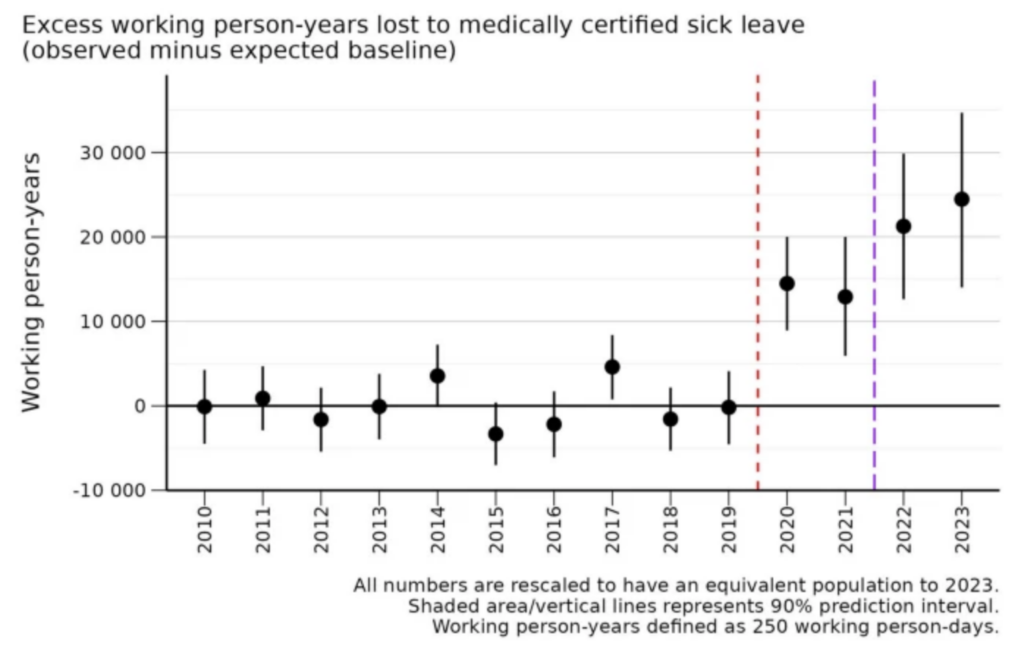
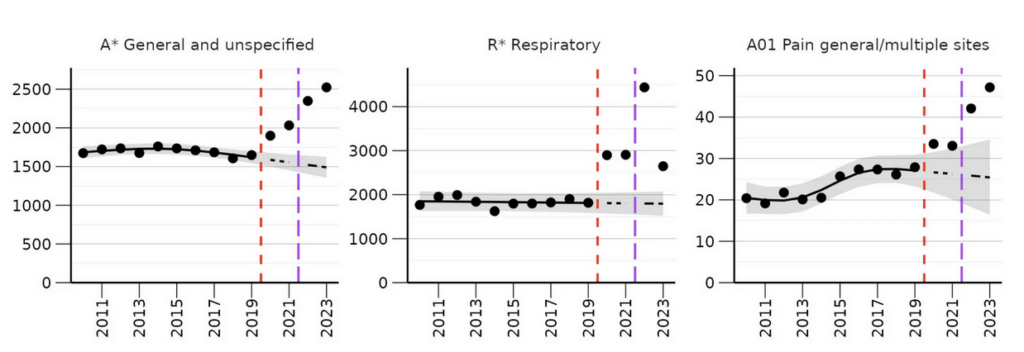
🤧 This (excellent!) article in English (2026-01-22) says that Norway’s total sick leave is an outlier among countries — that it has gone up more than in other countries, and says that Norway’s more generous sick leave policies mean that people actually do stay home when sick. This report in Norwegian from Norway (2025-05-05) support the English article, and points out that in many countries but not Norway, long term illness means you lose your job and so you disappear from sick leave statistics.
🤧 This paper from Norway (2025-09-16) reports that sick leave for mental health issues increased by 28% between 2018 and 2023.
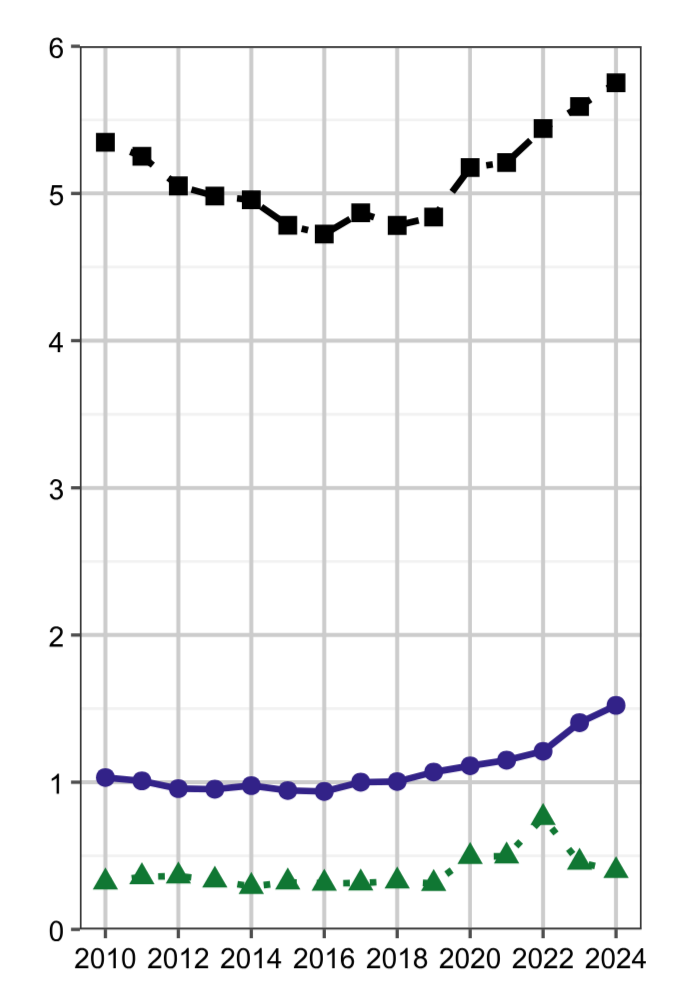
⚾️⚾️ This paper from USA (2026-01-17) reports that the number of pediatric testicular torsion cases went up significantly when the pandemic started, from 2.06 mean monthly case volume at the author’s institution to 3.69. It dropped to 2.95 by mid-2023, but you will notice that’s still almost 50% higher than pre-pandemic.
🤰🧠 This paper from USA (2026-10-10) found no neurological differences between babies whose mothers had COVID-19 while pregnant and those whose mothers did not have COVID-19.
This paper from UK (2026-01-22) reports that the number of diagnoses for several unrelated illnesses declined after COVID-19 appeared and still haven’t returned to pre-pandemic levels. The drops in expected diagnoses was:
- 27.7% for depression;
- 16.4% for asthma;
- 15.8% for chronic obstructive pulmonary disease (COPD);
- 17.1% for psoriasis;
- 11.5% for osteoporosis.
On the other hand, diagnoses of chronic kidney disease have risen by 34.8% and diagnoses of dementia have risen for white people and non-poor people, but stayed basically the same for non-white and poor people.
This article (2026-01-22) by the lead author of the paper makes it clear that he thinks that most cases of fewer diagnoses are due to either poorer availability of health care or changes in health care (e.g. not needing a diagnosis to access health care, as happened with therapy for depression).
Vaccines
👁️ This paper from Turkey (2025-03-31) reports that the cornea got slightly thicker and the endothelial cell density decreased slightly after two doses of Pfizer. I think that’s a good thing? (And no, I have no idea why this would happen.)
Pathology
This Stats Canada report says that COVID-19 dropped to 9th place in the leading causes of death in 2024. This is still higher than suicide (#13).
Influenza
Vaccines
💉 This report from China (2026-01-15) on the effectiveness of the current season’s influenza vaccines reports that the VE against confirmed infection was:
- 41.3% overall;
- 70.9% for children under 5;
- 37.4% for children 6-17 years old;
- 53.1% for 18-59 year olds;
- 25.3% for people over 59.
Shingles
Vaccines
💉 This paper from USA (2026-01-20) reports that the shingles vaccination reduces biological age as measured several different counts. (I couldn’t tell which shingles vaccine (Zostavax or Shingrix) it was, sorry.)
I find this association between vaccination and aging very interesting, as I have been lately been wondering if what we think of as “aging” is just “body getting damaged by repeated viral infections”.
However, they said this effect was “most pronounced within three years post-vaccination, with slower aging persisting beyond this window”. I don’t know exactly what that means, but it sounds to me kind of like the vaccine hit the pause button for three years and then went back to regularly scheduled aging. I don’t understand how that mechanism would work: if the aging is from shingles happening, then I would think that you would see more benefit the more shingles happened in the control group i.e. the longer the study went on.
One possibility is that the herpes zoster (chickenpox and shingles) virus wanders around the body at a level which is too low to cause symptoms but is high enough to get the body to up its inflammation slightly; by training the immune system to seek&destroy the herpes zoster virus, the immune system is able to clear out the herpes zoster virus to a level where it’s not provoking inflammation.
💉 This paper using data from Ontario (2026-01-22) reports that a population that was just-barely-young-enough-to-be-eligible-for-Zostavax had a ~2% absolute lower rate of dementia over five years than a just-barely-old-enough-to-be-ineligible population. This was statistically significant for women but not for men. (This is consistent with at least one other study (2022-04-13) of this type!)
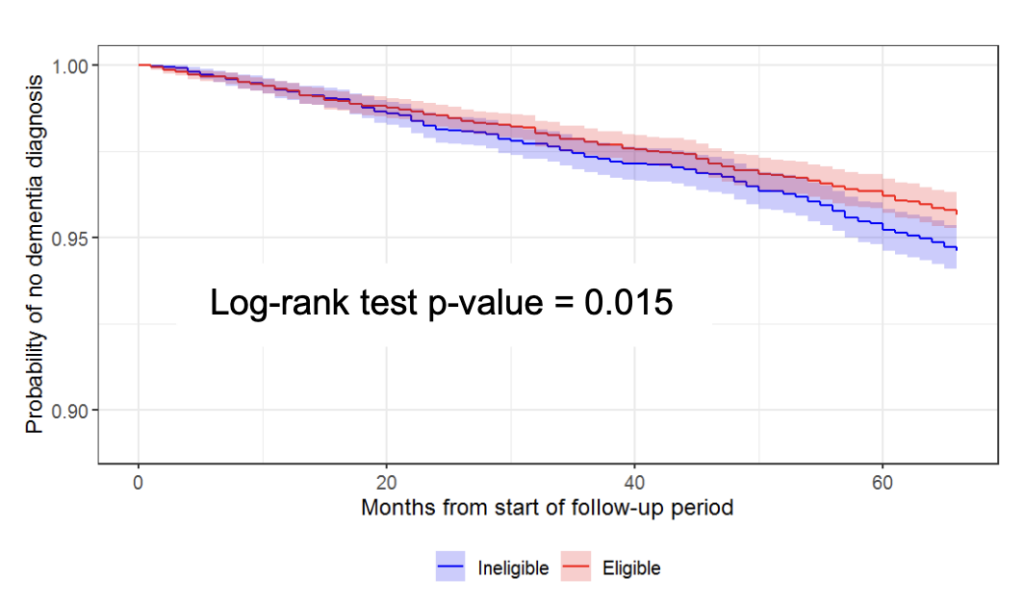
They also compared Ontario cohorts to cohorts in provinces which did not give Zostavax (yet), and found similar results. @@@ check
Mpox
Pathology
😬 This paper from Nigeria (2026-01-20) reports that about 3% of mpox infections are asymptomatic.
The study also found that healthcare workers were no more likely to be infected than volunteers from the general populace, and that a smallpox vaccination — generally from before around 1980 — still gives measureable antibodies against mpox.
This paper from USA (2026-01-20) reports that slightly more than half of participants who had had mpox infections had at least one lasting symptom. About half of the lasting symptoms were cosmetic (mostly scarring). Most of the other symptoms were related to ah waste disposal functions, but there were also reports of neurological impairment, weight loss, sexual impairment, and chronic pain.
Measles
Transmission
According to the Government of Canada Measles and Rubella Monitoring Report (updated 2026-01-19), in the week ending 10 January 2025, the following jurisdictions had the following number of measles cases:
- Canada: 17;
- Alberta: 7;
- Manitoba: 6;
- BC: 2;
- Saskatchewan: 2.