
If you just want to see which vaccines have which off-target benefits, and you trust that I’m not making stuff up, you can just read the Table of Contents below.
However, I think it’s instructive to scroll quickly through all of the research to get a sense of just How. Much. Research. Has. Been. Done. On. This. This is not some fringe, out-there, woo-woo thing, there is a f lot of research backing it up.
Introduction
One way to think about vaccines is as culture, as an external immune system memory. This external memory allows us as a species to fight together against pathogens who drive to live interferes with our own drive to live.
Not only have vaccines been great at helping us fight things we wanted them to, they have also been helpful at fighting things we didn’t realize they could help! It turns out that it is not unusual for a vaccine that was developed to fight disease X to also have an unexpected beneficial action against disease Y. This page gives summaries of research papers documenting numerous “off-target” benefits of vaccines.
NOTE: most of the research is on elderly patients because they are easier to study — they are more likely to have heart attacks, strokes, and other Big Deal illnesses, so it’s cheaper to do research on them. This does not mean that if you are young, you don’t have anything to worry about! I hope something you learn from this page is that viruses cause long-term damage to your body. A young body might not notice the damage as soon as an elderly person would, but that doesn’t mean the damage doesn’t matter — you just might get hit by it later. For example Epstein-Barr Virus (probably) causes Multiple Sclerosis, but you might not get symptoms until years later.
Influenza Vaccine
(NB: There are multiple different types of influenza vaccine. I have the impression that the all egg-based and cell-based vaccines are pretty similar in their effects — I haven’t seen any studies which distinguish between them.)
The influenza vaccine markedly reduces the risk of heart attacks, pneumonia, congestive heart failure, stroke, and all-cause mortality in elderly and/or otherwise vulnerable people.
And OMG there are SO MANY papers about influenza vaccines reducing risks. This is not some niche wild-eyed theory, this has a LOT of research behind it.
Note that the risk reduction was really variable, between papers, but that’s understandable: the strains circulating and strains in the vaccines are different every year, so they are not always well-matched. One paper showed that if the circulating and vaccine strains were not well-matched, then the vaccine didn’t provide much benefit.
Several studies showed a significant reduction in risk if people got multiple vaccinations (presumably in different years). My theory is that getting flu vaccines over and over gives you exposure to many different strains, which makes you more resilient to strains that are not in the current year’s vaccine — both because you might have seen that strain in a previous year and because you might have developed antibodies that are able to attack a broader class of influenza viruses.
Reduced risk of cardiovascular issues
- this paper from Spain (2023-10-18): influenza vaccination gave a 15% lower risk of heart attack;
- this paper from Taiwan (2022-05-18): among women with COPD, 2 or 3 vaccinations lowered the risk of stroke by 30%, and 4 or more vaccinations lowered it by 68%;
- this paper from Taiwan (2019-07-01): among people who had been hospitalized for a heart attack and subsequently got a flu vaccination had an 18% lower risk of all-cause mortality and 17% lower risk of hospitalization for heart failure;
- this paper from Denmark (2019-06-11): among ICU survivors, vaccinated one had a 8% lower risk of all-cause mortality, 16% lower risk of stroke, and 7% lower risk of heart attack;
- this paper from Denmark (2018-12-10): in patients with heart failure, vaccination gave 18% lower risk of all-cause death;
- this paper from Taiwan (2017-11-09): a vaccination lowered the risk of ischemic stroke by 41% in the flu season, 50% in the flu off-season, and 45% overall;
- this paper from Taiwan (2017-08-29): 20% reduction in major adverse cardiac events (MACEs) and stroke;
- this paper from Taiwan (2016-12-22): among patients with atrial fibrilation, a vaccination lowered the risk of hemorrhagic stroke by 3% during the influenza season, 51% during the influenza off-season, and 28% overall;
- this paper from Taiwan (2016-05): among patients with chronic kidney disease, getting 1 to 3 flu vaccines (presumably in different years) lowered the risk of hospitalization for heart failure by 40% and four or more vaccinations lowered the risk by 90% over nine years;
- this paper from Taiwan (2016-03): an influenza vaccine well-matched to the currently circulating strains gave a lower risk of heart attack (32% for men and 27% for women), but a vaccine poorly matched to the circulating influenza strains had no effect;
- this paper from Taiwan (2016-02-01): among people who did not get a flu infection, the ones who got a vaccine had an 18% lower risk of atrial fibrillation than those who did get a vaccine (my guess is that more people in the unvaccinated group got asymptomatic infections);
- this paper from Taiwan (2014-04-01): 1 or 2 vaccinations in the previous five years lowered the risk of hospitalization for stroke by 8%, 3 or 4 lowered the risk by 27%, and 5 vaccinations reduced the risk by 44%;
- this paper from UK (2014-03-10): vaccination gave a 24% lower risk of a stroke in the same flu season, but did not change the risk of a transient ischemic attack.
- this paper from Taiwan (2014-05-14): among COPD patients, 2-3 doses of influenza vaccine (presumably in different years?) lowered the risk of hospitalization for acute coronary syndrome by 52%; more than 4 vaccinations lowered the risk by 80%;
- this paper from Taiwan (2013-06-11): among COPD patients, vaccination lowered the risk of ischemic heart disease by 25%;
- this paper from Taiwan (2013-03-25): among COPD patients, vaccination lowered the risk of hospitalization for heart failure by 56%;
- this paper from Thailand (2011-02-02): among patients hospitalized with acute coronary syndrome, those who got an influenza vaccine afterwards (I’m not sure how long afterwards) had a 30% lower risk of major adverse cardiac events (I’m not sure over what time period);
- this paper from UK (2010-10-19): people who got an influenza vaccine had a 19% lower risk of a heart attack;
- this paper from Taiwan (2007-01-26): 44% lower all-cause mortality, 65% lower stroke risk, 60% lower risk of renal disease, 55% lower risk of diabetes, 53% lower risk of pneumonia, 45% lower risk of COPD, 26% lower risk of cancer, 12% lower risk of heart diseases;
- this paper from USA (2006-08-01): no reduction of heart attack seen from an influenza vaccination;
- this paper from Germany (2005-06-09): vaccination gave a 54% lower risk of stroke, especially in men;
- this paper from Netherlands (2004-11-03): 10% lower all-cause mortality with one dose, 24% lower all-cause mortality with two doses (I assume in subsequent years)
- this paper from France (2002-02-01): vaccination gave 50% lower risk of stroke in the following year and 68% lower risk in the following five years;
- this paper from USA (1994-09-22): vaccination reduced hospitalization for pneumonia and influenza by 48% to 57%, hospitalizations for acute and chronic respiratory conditions by 27% to 39%, and hospitalization for congestive heart failure by 37%;
- this review paper (2021-03-13 March): 25% lower risk of all-cause mortality, 18% lower risk of all-cause cardiovascular mortality, 13% lower risk of MACEs;
- this review paper (2013-10-23): 36% lower risk of MACEs;
- This paper from Denmark (2026-04-02) reports that even among people who had a documented history of an influenza infection in the previous year, vaccinated people still only had about half the risk of a acute myocardial infarction (AMI) or stroke.
- This paper (2002-02-01) reports that people over 60 who got an influenza vaccine had a 50% lower risk of stroke in the year after vaccination and 58% lower risk of stroke in the five years after vaccination.
- This paper (2000-12-19) reports that among people with documented coronary heart disease, people who got an influenza vaccination had one-third the risk of a myocardial infarction as unvaccinated people did.
- This paper (1998-09-14) reports that among people over 65, people who received an influenza vaccination had a 27% lower risk of hospitalization for congestive heart failure.
Reduced risk of dementia
This review paper (2025-11-21) reports that compared to unvaccinated people, the influenza vaccine reduced the risk of dementia by 13%.
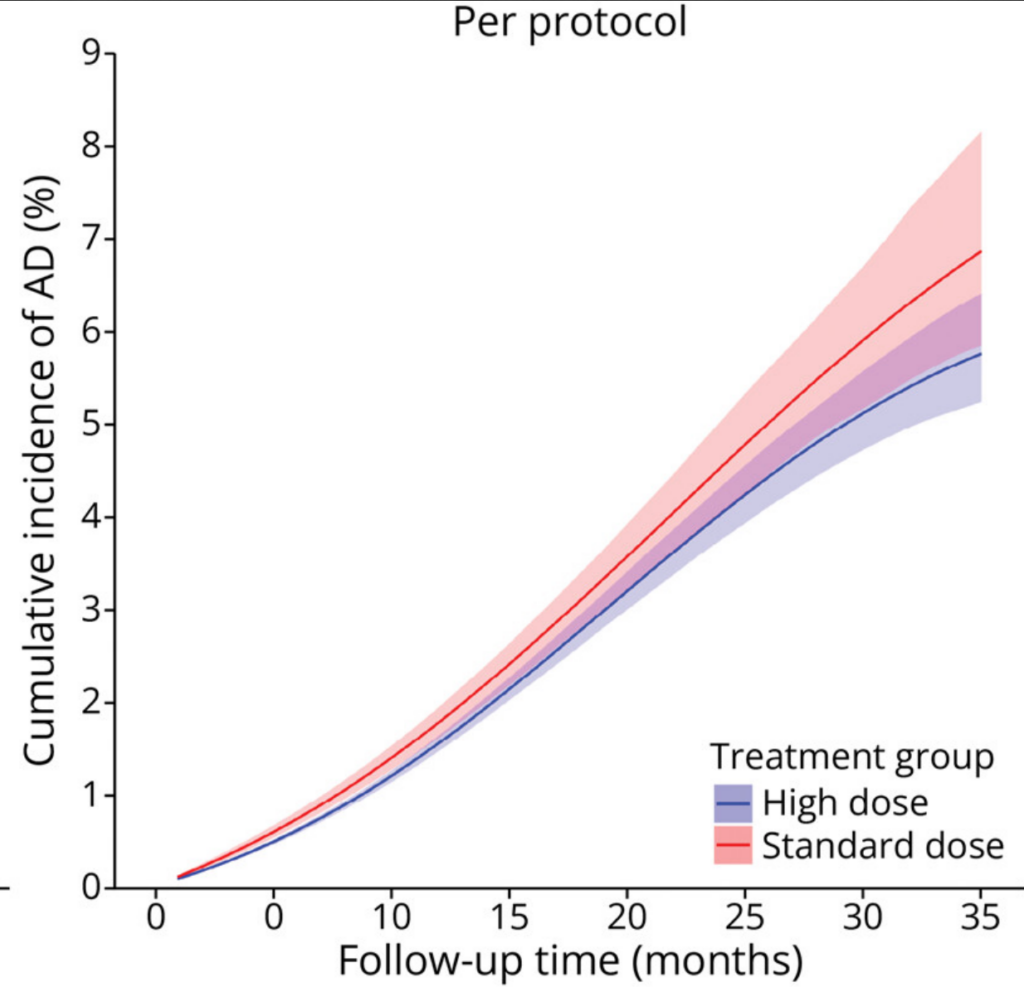
This paper from USA (2026-04-01) reports that seniors who got the high-dose influenza vaccine had a 17% lower risk of getting Alzheimer’s Disease than those who got the standard-dose influenza vaccine.
This paper from USA (2022-06-13) reports that flu-vaccinated patients had 40% lower risk of Alzheimer’s Disease.
This paper from USA (2021-09-14) reports that veterans over 64 y/o had a 14% lower risk of dementia.
this paper from Taiwan (2020-04-01): among COPD patients, 2-3 doses of influenza reduced the risk of dementia by by 19% compared to unvaccinated, and four doses reduced the risk by 66%.
This paper (2022-02-10) reports that the influenza vaccination actually increased the risk of dementia by 11% in patients over 59.
This paper from USA (2024-03-02) reports that people who got a influenza vaccination had a 17% lower risk of dementia compared to patients who did not, a 21% lower risk of Alzheimer’s Disease, a 52% lower risk of vascular dementia, and 6% lower risk of other dementias.
Pneumococcal Vaccine
Reduced risk of dementia
This review paper (2025-11-21) reports that compared to unvaccinated people, a pneumococcus vaccine reduced the risk of any dementia by 36%.
This paper from USA (2023-08-07) reports that the pneumoccal vaccines reduced the risk of Alzheimer’s Disease by 15% and dementia by 18%.
this paper from UK (2023-10-02): influenza vaccination cuts risk of dementia by 9%.
This paper from USA (2022-08-07) reports that people who got a pneumococcal vaccine had a 27% lower risk of developing Dementia over a two-year span in people over 65.
Pneumococcal Vaccine plus Influenza Vaccine
Reduced respiratory and cardiovascular risks
This paper from Taiwan (2012-04-27) reports that elderly patients who got both a pneumococcal and an influenza vaccine did better than patients who only got an influenza vaccine:
- 26% lower risk of all-cause mortality;
- 23% lower risk of all-cause hospitalization;
- 13% lower all-cause inpatient expenditures.
This paper from Hong Kong (2010-11-01) found that people who got a pneumococcal vaccine and an influenza vaccine had a 35% lower risk of all-cause mortality, 33% lower risk of stroke, 43% lower risk of pneumonia, and 48% lower risk of heart attack;
This paper from Sweden (2003-09-08) reports that people who got an influenza vaccine and/or a 23-valent pneumococcal vaccine had a 32% lower risk of influenza, a 22% lower risk of pneumonia, a 54% lower risk of invasive pneumococcal disease, a 45% lower risk of all-cause mortality, a 47% lower risk of COPD, and a 28% lower risk of heart failure.
Note that pneumococcal disease is caused by a bacteria. Vaccines are not just for viruses.
Shingles Vaccine
There are two vaccines against the shingles virus (herpes zoster, which also causes chickenpox). Zostavax (a live attenuated virus vaccine produced by Merck since 2006) was the first, but it’s been superceeded by Shingrix (a recombinant protein vaccine producted by GSK since 2017) which is more effective. Both reduce dementia rates.
Unspecified brand
Some papers don’t distinguish between Zostavax and Shingrix, alas.
Reduced aging
This paper from USA (2026-01-20) reports that the shingles vaccination reduces biological age as measured several different counts. This effect was strongest in the first three years after the vaccination.
Reduced risk of cardiovascular issues
This paper from USA (2019-03-19) reports that people 50-79 years old who got a shingles vaccination were half as likely to get a stroke than those who were unvaccinated. The effects were not apparent after ten years, and the effects were strong in white people but not Black or Latino. 🙁
This press release from USA (2026-03-17) about an as-yet unpublished electronic records study reports that people over 50 with atherosclerotic disease who got a vaccination with at least one dose of Zostavax or Shingrix were had a much lower rate of severe cardiovascular events than a similar population who did not get any shingles vaccines. Between one month and one year after the vaccination, the vaccinated had:
- 66% lower risk of all-cause mortality;
- 46% lower risk of a major adverse cardiac event;
- 32% lower risk of a heart attack;
- 25% lower risk of a stroke;
- 25% lower risk of heart failure.
Reduced risk of dementia
This review paper (2025-11-21) reports that compared to unvaccinated people, the shingles vaccine reduced the risk
- of any dementia by 24%;
- of Alzheimer’s Disease by 47%.
This paper from USA (2023-08-07) reports that vaccination against shingles reduces the risk of dementia by 25% in people >65 y/o over a two year period.
This paper from UK (2023-10-02) reports that people who got a shingles vaccine had a 12% lower risk of dementia than controls, a 9% lower risk of Alzheimer’s Disease, and a 29% lower risk of other dementia diseases.
This paper (2022-02-10) reports that a shingles vaccination reduced the risk of dementia by 27% in patients over 59.
These isn’t exactly about vaccination, but this paper (2024-03-12) reports that getting a herpes zoster infection increases the risk of getting dementia by 41%. Also a getting herpes simplex infection increases the risk by 57%.
This paper (2025-07-01) reports that getting a herpes zoster infection increases the risk of dementia by 13%.
Zostavax
Reduced risk of dementia
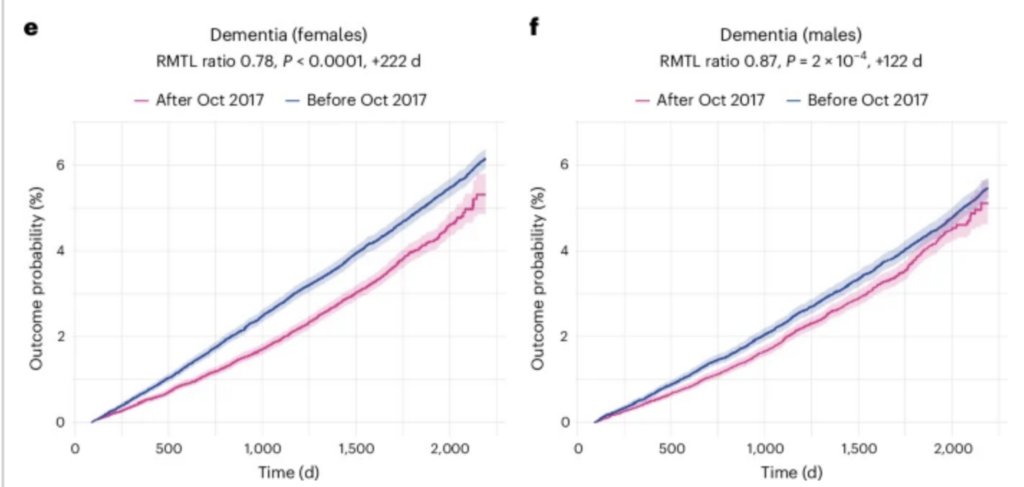
This paper using data from Wales (2025-04-02) was a beautiful, beautiful study, comparing dementia in people whose birthday was in the week before the eligibility cutoff with people whose birthday was in the week after the eligibility cutoff. They found that being eligible for the vaccine led to a 20% reduction in dementia over the next seven years, with a much stronger effect for women than for men.
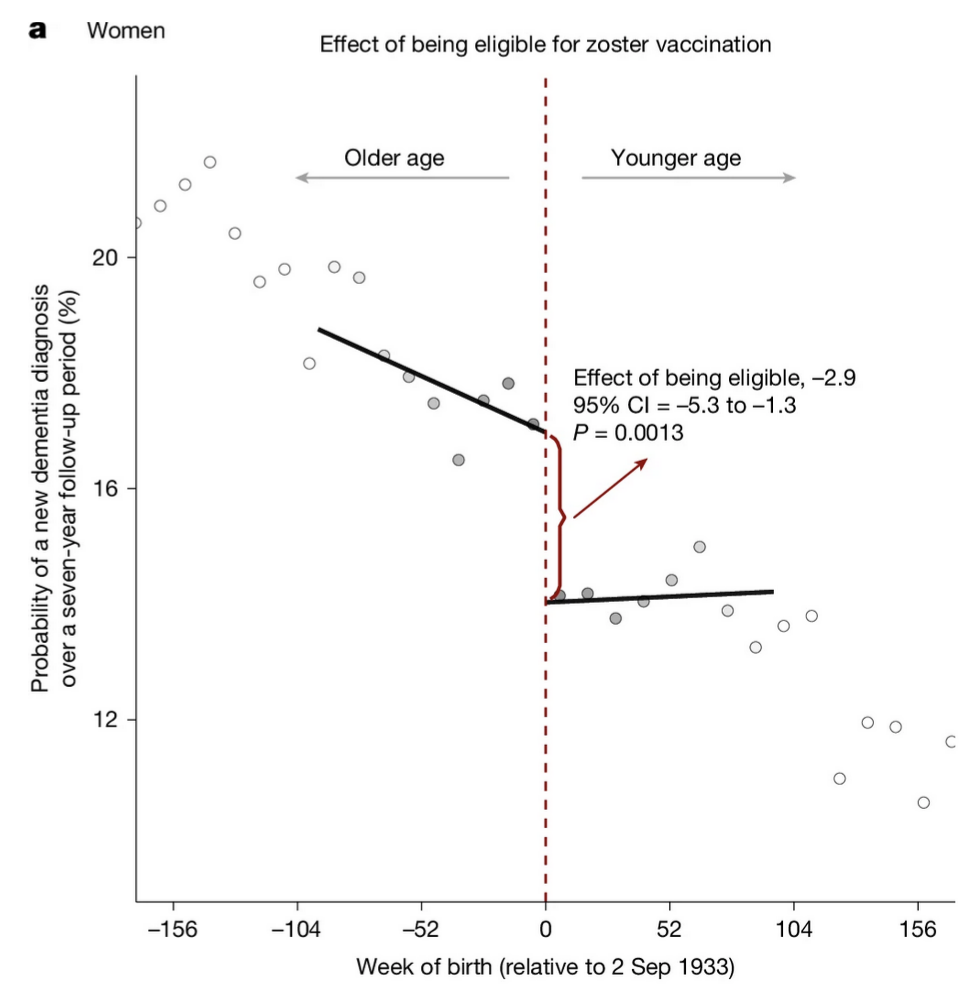
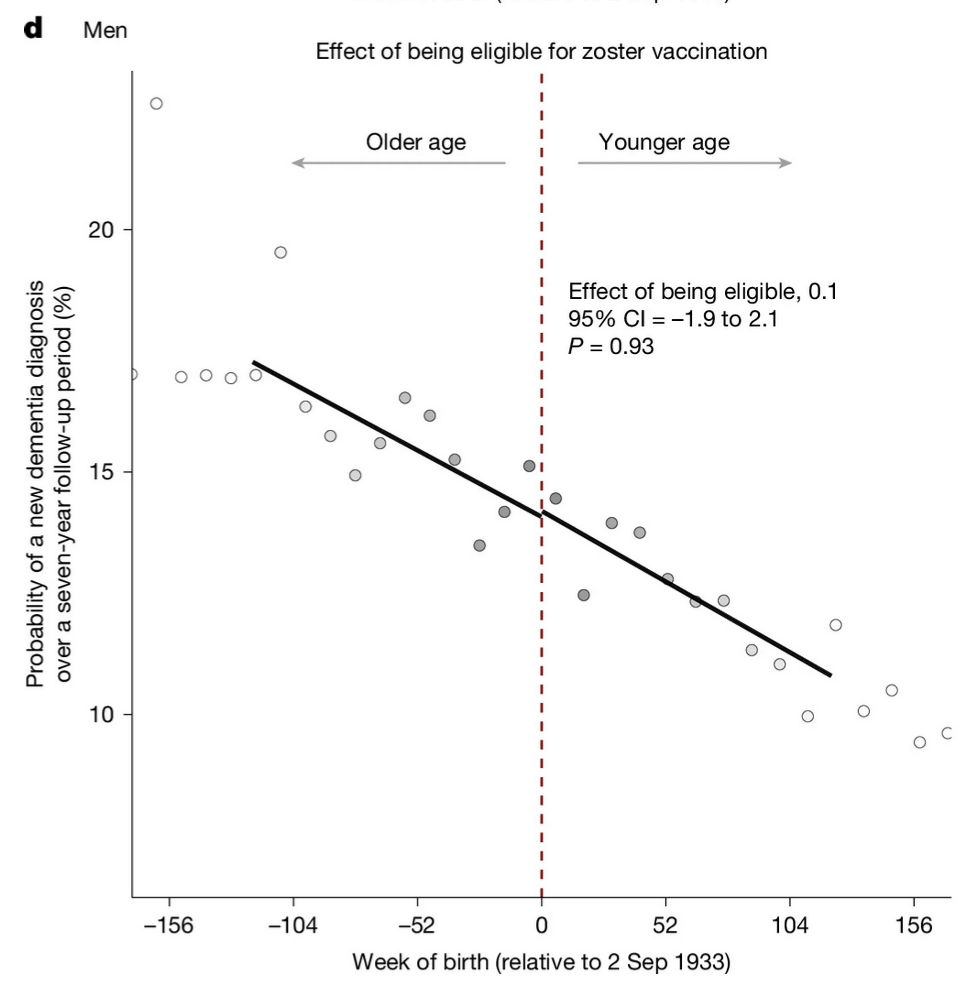
This earlier study using data from Wales (2022-04-13) wasn’t quite as slick, but they found that people over 70 who got a Zostavax vaccination had a 28% lower risk of dementia than people who did not. In addition, the unvaccinated had a 45% lower risk of a hip fracture (!) and a 42% lower risk of all-cause mortality.
This paper from Australia (2025-04-23), using the same basic technique as the Wales data paper above, reports that people who were eligible for a Zostavax vaccine had an absolute difference in dementia of 1.8 percentage points. (This is a kind of strange way of reporting it because I guess they didn’t have access to information about who actually got a Zostavax shot; I couldn’t find numbers which would let me calculate the relative risk reduction, sorry.)
This paper using data from Ontario (2026-01-22) reports that in a study (very much like the Australia study immediately above) found that the population that was eligible for Zostavax had fewer dementia diagnoses than the population that was ineligible. In this case, the absolute difference was about 2%. The difference was statistically significant for women but not for men. (This is consistent with the Wales study!)
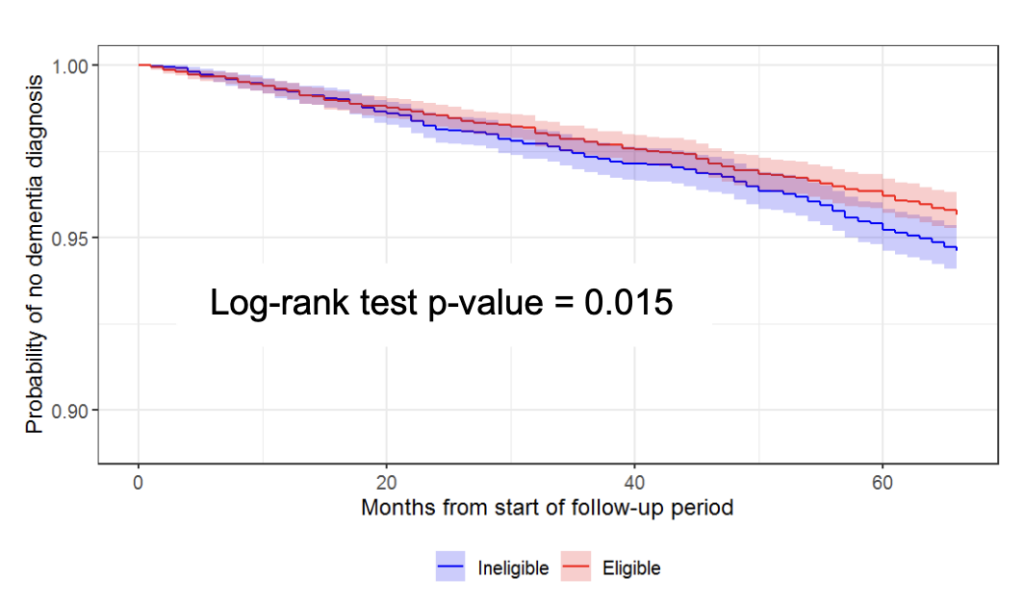
This paper from Canada (2025-02), like the Australian study, only looked at differences between people in the cohort eligible for Zostavax, not people who actually got the shot. It also found that dementia was significantly lower in the cohort of eligible women. Dementia rates were not statistically significantly different in the male cohorts.
This paper from USA (2024-04-02) reports that people vaccinated with Zostavax had a 21% lower risk of dementia and a 19% lower risk of developing Alzheimer’s Disease specifically.
Reduced risk of cardiovascular issues
This paper from South Korea (2025-05-05) reports that people who got a Zostavax vaccine had a 23% lower risk of overall cardiovascular events. The effect was strongest in the first two years after the vaccination, but lasted for eight years.
This paper from USA (2021-04-20) reports that vaccinated people on Medicare over 66 with no history of a stroke had a 12-17% lower risk of getting a stroke (depending on which type of stroke) than the unvaccinated.
This paper from UK (2024-06-10) reports that people who got Zostavax vaccinations had a 16% lower risk of stroke compared to the historical rate, and 12% lower risk of stroke compared to people who got influenza vaccines but not a shingles vaccine.
The 2002 Wales study also looked at cardiac issues, and found that people over 70 who got a Zostavax vaccine had a 14% lower risk of a myocardial infarction and a 14% lower risk of a getting a stroke.
Shingrix
Reduced risk of dementia
This paper from UK (2024-07-25) used the date of the switchover from Zostavax to Shingrex to discover the relative merits of the two, and reports that Shingrix vaccinations were 17% more effective against dementia in the six years following vaccination than Zostavax. The effect was greater in women than in men.
This paper from USA (2026-04-28) reports that Shingrix provides significant protection against various kinds of dementia. Compared to people who did not get Shingrix vaccinations, people who did had these lower risks in the given followup time periods:
| against | 3 years or less | more than 3 years |
| any dementia | -33% | -26% |
| Alzheimer’s | -28% | -17% |
| Vascular dementia | -33% | -34% |
This paper from USA (2026-06-16) reports that people in nursing homes who got a Shingrix vaccination had a 24% lower risk of getting dementia in the next four years.
Reduced risk of cardiovascular issues
💉 This paper from USA (2026-08-26) reports that the Shingrix vaccine provides even more off-target benefits than Zostavax (the older shingles vaccine, no longer approved in Canada) does. Compared to Zostavax, over 7 years, people who got Shingrix had:
- 9% lower cardiovascular burden;
- 10% decrease in ischemic heart disease;
- 12% decrease in heart failure;
- 12% decrease in ischemic stroke in men (but not women!);
- 7% decrease in artrial fibrillation.
This paper from USA (2023-11-15) reports that two doses of Shingrix lowered the risk of myocardial infarction (aka heart attack) by 27% and the risk of mortality by 30%. (The paper is paywalled, I don’t know how long the effect lasts.)
RSV Vaccine
There are three different RSV vaccines approved in Canada for older and/or clinically vulnerable adults at the moment:
- RSVPreF3 (a RSV subunit adjuvanted vaccine, brand name Arexvy, made by GSK, approved 2023-08-04);
- RSVpreF (bivalent recombinant protein subunit vaccine, brand name Abrysvo, made by Pfizer, approved 2023-12-21);
- mRESVIA (a mRNA vaccine, brand name mRNA-1345) RSV, made by Moderna Biopharma Canada Corporation, approved 2024-11-06).
NB:
For babies, there is also a prophylactic treatment for newborns and a vaccine for pregnant woman, but I don’t believe we know enough about the long-term off-target benefits because 1) they are so new and 2) children don’t have as many illnesses as seniors.
Unspecified brand
Reduced risk of cardiovascular issues
This paper (2025-02-09) reports that participants with any RSV vaccination had a 21% lower risk of getting a stroke in the same season as the vaccination compared to people who did not get a vaccination. (This paper from USA (2024-04-15) reports that 22% of patients hospitalized with RSV had a major cardiac event while still in hospital.)
Abrysvo/RSVpreF
Reduced risk of cardiovascular issues
This paper (2025-08-30) reports that in people over 60, Abrysvo had the following vaccine effectivenesses compared to unvaccinated controls:
- 9.9% against all-cause cardiorespiratory hospitalization;
- 7.4% against all-cause cardiovascular hospitalization;
- 19.4% against stroke.
Arexvy/RSVPreF3
Reduced risk of cardiovascular issues
This paper from UK (2025-06-25) found that Shingrix and Arexvy had similar effectivenesses against dementia. They noted that both are GSK products, and both have an adjuvant called AS01 (that GSK has a patent on!), so suggest that maybe it’s the adjuvant. I think that’s unlikely — because Zostavax does have some power against dementia and Zostavax does not have an adjuvant.
COVID-19 Vaccines
There are a huuuge number of things that COVID-19 vaccines help protect against, but many of the studies are just “protection against the damage that COVID-19 does”. At this point, it is really difficult to tell the difference, because pretty much everybody has had COVID-19 by now. (I think I only know three people personally who probably haven’t had COVID-19, and one of them is me.)
Once we get a COVID-19 vaccine which stops onward progression of the disease and so we humans can make it a really rare disease (like e.g. polio), then we humans will be able to do research to see what other things the COVID-19 vaccination might prevent.
Reduced risk of cardiovascular events
This paper from USA (2026-06-15) reports that a COVID vaccination cuts the risk of a major cardiac event by about half in people over 75 y/o, compared to those who got an influenza vaccination. There was no benefit to a COVID-19 vaccination for people under 75 y/o.
Reduced risk of all-cause mortality in COPD patients
This paper from South Korea (2025-01-03) reports that COVID-19 vaccinations help reduce all-cause mortality in Chronic Obstructive Pulmonary Disease (COPD) patients — even the ones that did not get COVID-19 infections! It wasn’t a small effect, either. The rate of death per 10,000 COPD patients based on vaxed/unvaxed vs. infected/uninfected was:
| vaccinated | unvaccinated | |
| didn’t get COVID-19 | 281 | 2106 |
| got COVID-19 | 661 | 4510 |
Now, there are some reasons to question this results: the number of people in the study was smallish (hundreds and not thousands), confidence ratios were wide, and it might be that people who get vaccinated just take care of their health better than people who do not get vaccinated. Still.
Other vaccines’ reducing risk of COVID-19
To turn it around a little bit, there are also a fair number of vaccines which help against COVID-19, which I documented here.
Hepatitis A
This paper (2022-02-10) reports that the Hepatitis A vaccination reduced the risk of dementia by 22% in patients over 59. Combined with the typhoid vaccine, the risk was 32% lower than for the unvaccinated.
Tdap Vaccine (tetanus, diphtheria, pertussis)
Reduced risk of dementia
This review paper (2025-11-21) reports that compared to unvaccinated people, the Tdap vaccine reduced the risk of any dementia by 33%.
This paper from USA (2023-08-07) reports that people who got the TDAP or TD (tetanus and diphtheria) vaccine had a 30% lower risk of developing Dementia over a two-year span in people over 65.
This paper from USA (2021-04-15) reports that veterans over 64 y/o who were vaccinated with TDAP had a 52% lower risk of dementia.
Caution: TDAP was a really common vaccination in the USA, so people who did not get a TDAP vaccination might have had poorer socioeconomic upbringings — which is also a risk factor for dementia.
Note that tetanus, diphtheria, and pertussis are all bacteria.
BCG (tuberculosis) Vaccine
Help against diabetes
It’s early yet, but there’s some evidence that the BCG vaccine can help diabetes. This paper (2021-10-22), this paper (2024-07-30), and this paper (2025-06-20) all report that giving humans multiple doses of BCG lowers blood sugar and reduces insulin requirements. This article (2026-06-09) reports results presented at a conference: in a Phase 2 study, the BCG vaccine reduced insulin requirements in people with Type 1 diabetes.
Note that tuberculosis is a bacteria.
Bladder cancer
As this article (2024-04-11) explains, the BCG vaccine has been used to treat bladder cancer since the 1970s.
Reduced risk of dementia
This paper (2026-07-02) reports on further insights into the mechanism of the BCG reducing Alzheimer’s risk. BCG makes “persistent, trained immunity–like changes in immune cells in cerebrospinal fluid, including enhanced innate responsiveness and associated transcriptional programs” which lead to decreased amyloid-β levels in cerebrospinal fluid.
This paper from USA (2023-05-19) reports that bladder cancer patients who were vaccinated with BCG had a 20% lower risk of Alzheimer’s and associated dementia. This corroborates this earlier paper from Israel (2019-11-07) found that people with bladder cancer had a 4.8 times higher risk of dementia if they had not gotten one recent BCG vaccine.
mRNA Vaccines (including COVID-19 ones)
Reduced mortality from cancer
This article (2025-10-19) talks about this paper from USA (2025-10-22) found that
- In humans, an mRNA COVID-19 shot within 100 days before getting immune checkpoint inhibitor cancer therapy cut mortality in about half in the three years after treatment.
- In mice that they gave cancer to and then an immune checkpoint inhibitor, mRNA vaccines also improved outcomes. The wild part is that it didn’t matter whether they gave a COVID-19 mRNA vaccine or an mRNA vaccine with a cytomegalovirus antigen payload. It appears that there’s just something about the mRNA that was improving the mice’s outcomes!
Similarly, this paper from Bulgaria (2026-03-29) reports that people who got mRNA COVID-19 vaccines had significant survival benefits, particularly patients who got immune checkpoint inhibitors, particularly lung cancer patients.
This paper from USA (2025-10-22) reports the results from some animal studies which give a possible mechanism for how mRNA COVID-19 vaccines could sensitize tumours to immune checkpoint inhibitors.
This preprint from USA (2026-08-31) reports that people who got a COVID-19 vaccination (92% of which were mRNA vaccines) within 100 days before glioblastoma surgery had a medium survival time that was approximately double that of people who did not. Note that an influenza vaccine (which would not have been mRNA, since the first mRNA flu vaccine was approved on 2026-08-05 in the USA) did not change the median survival time.
This article (2025-10-31) gives a lay-person’s overview of what people know about cancer and mRNA vaccines.
Meningitis B
Reduced risk of gonorrhea
This article (2017-07-10) reports that people who were vaccinated against meningitis B had lower rates of gonorrhea. (The two viruses are relatively closely related.)
Measles Vaccine
Protection against losing immunity
The next snippet isn’t exactly like the above: it’s a case of the measles vaccine protecting against measles damage. However, when they developed the measles vaccine, they didn’t realize that measles caused the kind of damage that it did… so it’s still a “wow, we got more than we asked for!” situation.
When the measles vaccine was introduced, deaths plummeted. Except there was something strange: mortality dropped by more than would be expected by the number of measles deaths! It turns out that measles causes “immune amnesia” — measles resets the immune system. This meant that after getting measles, people were more prone to getting other infections.
In this case it’s not exactly that the measles vaccine “protects” against other pathogens, but it is true that they got an unexpected benefit from the measles vaccine.
Rotavirus Vaccine
Protection against diabetes
This paper from Australia (2019-01-22) reports that for kids under 5 years old, the incidence of Type 1 Diabetes dropped by 15% after the rotavirus vaccine was introduced.
HPV Vaccine
Protection against premature birth
This paper from Sweden (2026-10-07) reports that pregnant women who were vaccinated against HPV had lower rates of early delivery, low-birthweight babies, and amniotic membrane rupture.
Herd immunity
As this article (2026-03-19) mentions, vaccinating a group of people can help other people who weren’t vaccinated. I usually think of herd immunity as protecting babies who aren’t old enough to get vaccinated, but this article (2026-03-19) says that when little kids got vaccinated for pneumococcal disease, it reduced the pneumococcal disease level in adults, especially in older adults — even though older adults have had a pneumococcal vaccine since 1983! The vaccine for older people didn’t stop them from being carriers, but the pediatric vaccine did.
Vaccinating girls against HPV also reduced HPV in boys, as the same article points out.
Herpes Simplex
This isn’t exactly about vaccination vaccination (there is no vaccine for it yet), but this paper (2024-03-12) reports that getting a herpes simplex infection increases the risk of getting dementia by 41%.